
Fully remote offices erase commute times and break-room chats, yet they amplify the need for personal qualities that keep projects moving across time zones worldwide.
Strengthening the following five soft skills positions you to deliver consistent results, earn trust, and grow a career that thrives beyond geography.
1. Effective Communication
Clear, two-way communication keeps distributed teams aligned, reduces missteps, and helps everyone feel anchored to shared goals. Remote collaboration depends on written and spoken clarity because tone, facial expressions, and quick hallway corrections rarely exist.

Executives worldwide have noticed; in 2023, 58 percent of organizations ranked communication as their top hiring priority for virtual roles.
Put this skill into practice:
- Craft concise messages that anticipate follow-up questions and remove ambiguity.
- Confirm understanding by restating key points and inviting corrections before tasks begin.
- Blend channels—email for documentation, chat for rapid clarifications, and video for complex discussions—to match the message with the medium.
- Listen actively during calls, take brief notes, and reference colleagues’ comments later to demonstrate attention.
2. Time Management
Strong scheduling habits protect productivity and prove reliability when colleagues cannot physically observe daily effort.
Flexible hours benefit remote workers; they also test discipline. Success hinges on structuring days so that personal errands, household distractions, and global meetings coexist without chaos.
Strengthen daily planning:
- Map priority tasks against fresh-energy hours, then tackle deep-focus work before smaller chores.
- Block calendar segments for communication windows, allowing teammates worldwide to expect prompt responses.
- Review progress midway through the day, adjust workloads early, and prevent last-minute deadline stress.
- Adopt digital planners or Kanban boards that signal task status to stakeholders in real time.
3. Self-Motivation
Internal drive sustains momentum when supervisors are thousands of kilometers away and praise arrives mostly through emojis.
Results, not presence, shape career advancement in distributed teams. Maintaining enthusiasm without external prompts indicates leadership potential and builds credibility with managers evaluating promotions remotely.
Keep motivation high:
- Set incremental goals that feed long-term objectives and celebrate small wins to maintain positive momentum.
- Track completed tasks in a visible log; tangible proof of progress reinforces effort during quieter weeks.
- Refresh the workspace—lighting, seating, or background—to reset focus whenever energy dips.
- Seek challenging assignments that stretch skills and prevent routine from dulling engagement.
4. Adaptability
Change arrives quickly in virtual settings, from new collaboration apps to shifting client requirements across continents.
Teams that react flexibly outperform those spending days resisting updated processes. Adaptable professionals learn tools faster, absorb feedback without defensiveness, and help stabilize group morale.
Cultivate flexible thinking:
- Approach unfamiliar software as an experiment, allocating brief, timed sessions to explore features hands-on.
- Request feedback after each iteration, then implement adjustments promptly to show responsiveness.
- Balance established routines with trial periods that test alternative workflows before scaling them team-wide.
- Attend cross-functional meetings to understand upstream changes early and adjust plans before conflicts appear.
5. Problem-Solving
Technical hiccups and communication glitches surface regularly when teammates span multiple regions. Quick, structured problem-solving keeps momentum intact.
Recruiters value this trait so highly that many incorporate cognitive aptitude tests during hiring. Remote staff who resolve obstacles independently reduce delays and inspire confidence across departments.
Sharpen analytical approaches:
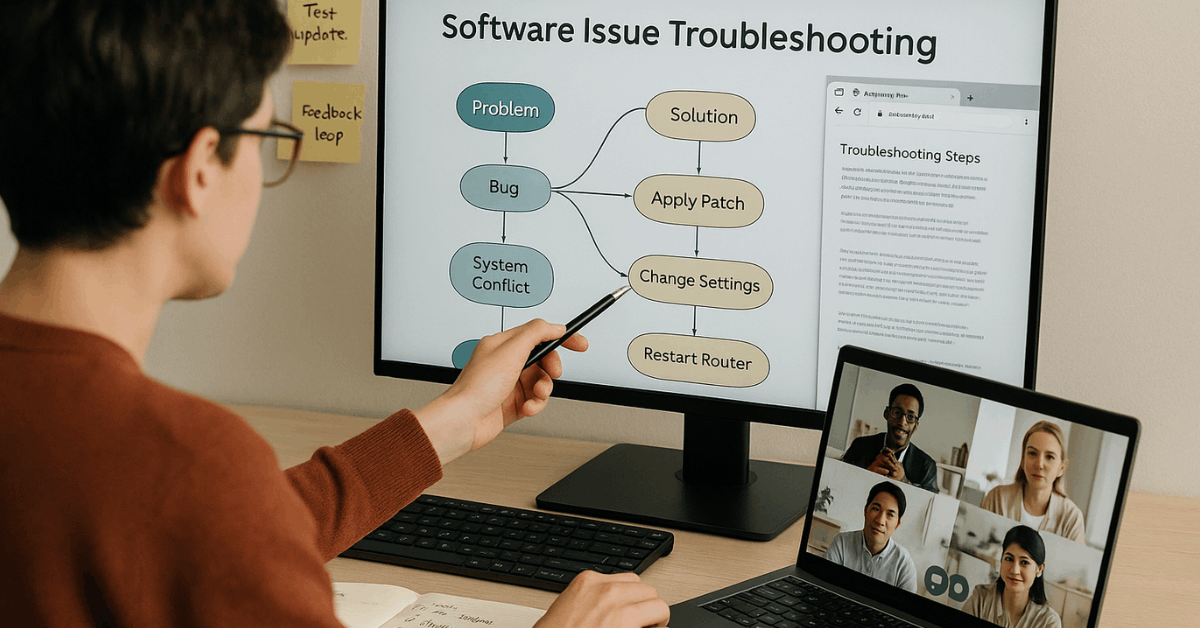
- Diagram issues with mind maps, separating root causes from visible symptoms before proposing solutions.
- Practice puzzles, logic games, or code challenges on a weekly basis to keep your analytical muscles active.
- Pause to collect complete information rather than guessing; evidence-based decisions prevent repeated fixes.
- Evaluate outcomes after implementation, noting lessons that refine future troubleshooting playbooks.
Building and Demonstrating Soft Skills in a Remote World
Cultivating soft skills doesn’t happen by accident, especially in a fully remote setup. There’s no casual mentoring over lunch or feedback whispered after a meeting. Instead, growth has to be more intentional and visible.
Start with a Soft Skills Self-Audit
You can’t improve what you haven’t named. Take time to assess where your soft skills stand today. This doesn’t need to be formal—just honest.
Ask peers, managers, or collaborators to give candid input on areas like communication clarity, reliability, responsiveness, or adaptability. What do they rely on you for? Where do they hesitate?
Jot down recurring themes. Then identify two or three soft skills that, if sharpened, would immediately improve how you show up for others.
Turn Feedback into a Weekly Plan
Once you’ve got your focus areas, treat them like any other goal—break them down and schedule time to work on them.
For example:
- If communication is the target, aim to send meeting agendas in advance and follow up with summaries.
- If you’re working on adaptability, commit to learning one new platform or tool every two weeks.
- If self-motivation needs work, block daily “deep focus” hours and log progress publicly in a shared doc.
Use tools like habit trackers, peer-learning circles, or accountability check-ins to stay consistent. Improvement doesn’t need to be flashy—it just needs to be visible and repeatable.
Make Your Efforts Noticeable
In remote work, what others see often outweighs how much you’re doing behind the scenes. That’s why showcasing soft skills matters.
Keep your calendar updated. Communicate availability. Reply within agreed response windows. Follow through on what you say you'll do.
These may seem small, but they broadcast reliability and thoughtfulness across time zones. And they do it quietly, without the need for a camera on.
Reintroduce Face-to-Face When You Can
Virtual doesn’t have to mean distant. Whenever it’s realistic, find moments to connect in person, whether that’s a quarterly team meetup, a coworking day with local colleagues, or a conference.
Even one or two real-world interactions can soften relationships that feel strictly transactional online. They reintroduce nuance, rebuild trust, and help you understand the quiet undercurrents in your team’s dynamic.
Conclusion
Remote work rewards people who combine reliable output with interpersonal finesse. Strengthening communication, time management, self-motivation, adaptability, and problem-solving equips you to excel from any location worldwide.
Treat each quality as a learnable asset, invest daily effort, and your remote career will gain resilience in a rapidly evolving global job market.