Freelancers who already run their income through PayPal face a weird decision. Do you double down on the ecosystem with a PayPal Mastercard, or keep things separate?
The PayPal Mastercard sounds like a logical pairing. Same platform, same dashboard, one unified view of your money. Tidy.
But that tidiness hides some trade-offs that matter if freelancing is your primary income. The application process is simple enough. The card's long-term fit deserves more scrutiny.
I'd argue the PayPal Cashback Mastercard creates a gravitational pull toward keeping all your finances inside one platform, and that pull is the exact thing freelancers should resist.
How the PayPal Mastercard Application Process Works in 2026
The application lives inside your existing PayPal dashboard, which means the barrier to entry feels deceptively low. A few clicks and some personal data, and you're done. But there are a few details worth slowing down for.
Where to Find the Application Page
Log into PayPal.com and look under the Products & Services or Wallet tab. Some users see a promotional banner if PayPal's system flags them as a good candidate. Others get targeted emails.
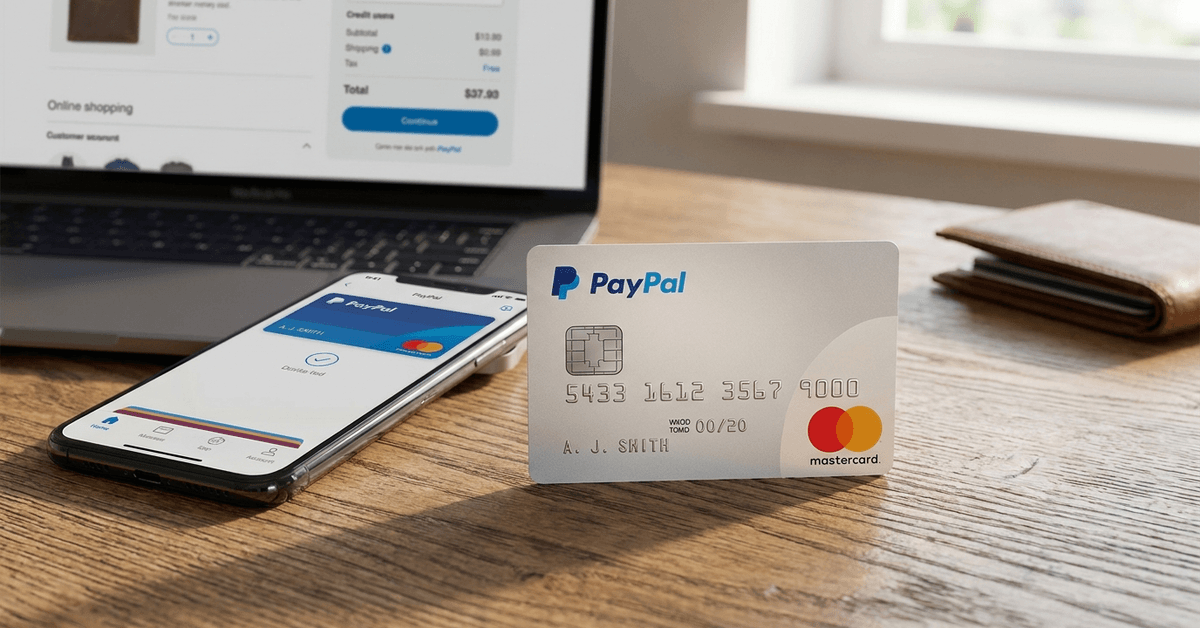
The application page itself is run through Synchrony Bank, which is the issuing partner for PayPal credit products in the US. That distinction matters because your relationship is technically with Synchrony, not PayPal, once the card is approved.
The Information Synchrony Needs
The application asks for standard credit card details: your address, Social Security number, annual income, and employment status.
Freelancers sometimes stumble on the income question because gig income fluctuates. Report your best honest estimate of annual gross. Synchrony does not require W-2 documentation during the application itself.
A hard credit inquiry hits your report as part of the review. That inquiry stays on your credit file for about two years, so timing matters if you're planning a mortgage or auto loan soon.
Approval Timeline and What Happens After
Decisions often come back within minutes. Some applications get flagged for manual review, which can stretch the wait to a few business days. Once approved, a physical card ships within one to two weeks.
A digital card number may appear in your PayPal wallet immediately after approval. That digital version works for online purchases right away, which is a nice touch if you need the card for a specific purchase.
PayPal Mastercard Features That Matter for Online Spenders
The feature list looks clean on paper. But not every feature carries equal weight depending on how you spend.
Cashback Structure
The PayPal Cashback Mastercard offers a flat 2% cashback on all eligible purchases and 3% cashback on PayPal purchases. Cashback is deposited directly into your PayPal balance. No categories to track, no rotating quarterly caps.
That flat structure appeals to people who hate managing bonus categories. And the 3% on PayPal purchases looks strong if you regularly buy through merchants that accept PayPal checkout.
No Annual Fee
The card carries no annual fee, which keeps the math simple. A 2% flat-rate card with zero annual cost is a reasonable deal on paper, especially if your spending volume is moderate.
Security Features
All transactions route through Mastercard's fraud monitoring plus PayPal's own dispute resolution layer.
Merchant details stay hidden behind PayPal's system during online checkouts, which adds a privacy buffer. Multi-factor authentication through the PayPal app adds another layer if you enable it.
The PayPal Ecosystem Lock-In Problem Nobody Discusses
I think the 2% cashback on the PayPal Mastercard is overrated for one specific reason: cashback deposits into your PayPal balance, not as a statement credit. That distinction creates friction.
Cashback sitting in a PayPal balance has three possible exits: spend it through PayPal, transfer it to a linked bank account (which can take one to three business days for free transfers), or use instant transfer for a fee.
Compare that to a card like the Citi Double Cash, which applies rewards directly as a statement credit. The money reduces your bill automatically. No extra steps.
For freelancers already receiving client payments into PayPal, this compounds the problem. Income arrives in PayPal. Cashback arrives in PayPal.
Now your entire financial life sits inside one company's platform. That concentration creates a single point of failure.
PayPal account limitations and holds are rare, but they do happen. Freezes can lock both your income and your cashback simultaneously.
A freelancer with a diversified setup: income in one place, credit rewards in another, spending on a separate card, has more resilience if any single account gets flagged or frozen.
The standard advice is to consolidate everything in one place for simplicity.
I disagree, specifically for freelancers, because the risk of a PayPal account hold wiping out access to both your income and your rewards outweighs the convenience of a single dashboard.
PayPal Mastercard vs. Other Flat-Rate Cashback Cards
A side-by-side look at how the PayPal Cashback Mastercard stacks up against two popular alternatives makes the trade-offs concrete:
| Feature | PayPal Cashback Mastercard | Citi Double Cash | Wells Fargo Active Cash |
|---|---|---|---|
| Cashback Rate | 2% (3% on PayPal purchases) | 2% (1% on purchase + 1% on payment) | 2% flat |
| Annual Fee | $0 | $0 | $0 |
| Reward Delivery | PayPal balance | Statement credit | Statement credit or points |
| Foreign Transaction Fee | Varies | 3% | 3% |
| Issuing Bank | Synchrony Bank | Citibank | Wells Fargo |
The PayPal card wins on the 3% PayPal purchase rate. But the Citi Double Cash and Wells Fargo Active Cash deliver rewards with less friction because cashback applies directly to your balance owed.
Common Mistakes During the PayPal Mastercard Application
The application is short, but a few errors trip people up repeatedly:
- Understating freelance income: Synchrony uses your stated income to set credit limits. Low-balling your number means a lower limit, which raises your utilization ratio the moment you start using the card.
- Ignoring the hard inquiry timing: Applying right before a mortgage pre-approval or car loan can ding your score at the worst possible moment. Space credit applications at least three to six months apart.
- Assuming instant physical card delivery: The digital card number may work immediately for online purchases, but physical card delivery takes one to two weeks. Plan accordingly if you need it for in-store purchases.
- Skipping the terms disclosure: The interest rate through Synchrony Bank can run high. Carrying a balance month to month erases the cashback benefit fast. Check Synchrony Bank's disclosure page for current APR ranges before applying.
Setting Up the Card After Approval
Once the physical card arrives, activation happens online through PayPal or via a toll-free number printed on the card's sticker. The card syncs automatically with your PayPal wallet.
Smart Configuration Moves
A few settings worth adjusting right after activation:
- Enable SMS and email fraud alerts through both PayPal and Synchrony Bank's notification system
- Set a spending alert threshold inside the PayPal app so you get pinged before hitting a self-imposed limit
- Link only recurring bills you trust to the card: streaming services, cloud storage, phone bills
- Review your first statement carefully to confirm the cashback percentage matches what was advertised
Tracking Cashback and Statements
The PayPal dashboard shows cashback earned per transaction. Statements come from Synchrony Bank, not PayPal, so check both platforms during the first month to understand where each piece of information lives.
The split between PayPal's interface and Synchrony's billing can feel clunky until you build the habit.
Questions People Ask About PayPal Mastercard
Q: Does applying for a PayPal Mastercard hurt my credit score? The application triggers a hard inquiry through Synchrony Bank, which typically drops your score by a few points. That dip usually recovers within a few months as long as no other credit applications follow closely.
Q: Can I use the PayPal Mastercard outside the United States? The US-issued PayPal Cashback Mastercard works wherever Mastercard is accepted internationally. However, foreign transaction fees may apply depending on current card terms. Check your cardholder agreement before traveling.
Q: What happens to my cashback if PayPal closes my account? Unredeemed cashback sitting in your PayPal balance could be inaccessible during an account limitation or closure. Transferring cashback to a linked bank account regularly reduces this risk.
Q: Is there a minimum credit score needed for approval? Synchrony Bank does not publish a specific minimum score. Applicants with scores in the mid-600s have reported approvals, but income and existing debt load also factor into the decision. No score guarantees approval.
Q: Can I get a PayPal Mastercard without a PayPal account? No. An active, verified PayPal account is required before the application even appears. The card is designed to work within the PayPal ecosystem, so the account requirement is baked into the product.
Conclusion
The PayPal Mastercard makes practical sense for shoppers who already live inside PayPal's platform daily. Freelancers should weigh the ecosystem lock-in risk against the convenience of a single dashboard carefully.
A flat 2% cashback rate loses its edge when the reward delivery method adds unnecessary steps. The smarter move might be pairing a separate cashback card with PayPal for income only.